Essential Tools Every Home Cook Needs in Their Kitchen
Table of Contents
SHOP THE ESSENTIALS
Best Overall Kitchen Essentials
Good kitchen gear doesn’t make you a better cook on its own. But the wrong tools — like a knife that can’t hold an edge, a pan that warps in the oven, or a thermometer that reads fifteen degrees off — will consistently work against you regardless of your skill level. The right equipment removes friction and gives you reliable, predictable results.
This guide covers what a serious home cook should own. It’s not everything you could buy, but the specific tools that earn their place through everyday use. Everything here is organized by category, with honest notes on quality thresholds and where to spend versus where to save.
Most of this gear should last a decade or more. Buying once and buying the right tool almost always costs less over time than replacing cheap versions every few years.
Quick Answer: What Are the Must-Have Kitchen Tools?
The non-negotiable tools for a serious home kitchen are:
- Sharp 8-inch chef’s knife
- Sturdy cutting board
- 10-inch stainless skillet
- 12-inch cast iron skillet
- Dutch oven
- Instant-read thermometer
- Kitchen scale
- Half sheet pan
- Add a stand mixer and bench scraper if you bake
These cover the vast majority of what a home cook actually does.
Best Kitchen Tools by Category
| Category | Budget Pick | Best Overall | Premium Pick |
|---|---|---|---|
| Chef Knife | Victorinox Fibrox Pro | Wüsthof Classic 8” | Shun Classic 8” |
| Cast Iron | Lodge 12″ | Stargazer 12″ | Finex 12-Inch Cast Iron Skillet |
| Stainless Skillet | Tramontina Tri-Ply | All-Clad D3 | Made In Stainless |
| Dutch Oven | Lodge Enameled | Staub 5.5QT | Le Creuset Signature |
| Thermometer | TempPro TP19 | Thermapen ONE | ThermoWorks RFX |
| Kitchen Scale | Ultrean Food Scale | Escali Primo | OXO Good Grips |
| Sheet Pan | Nordic Ware Naturals | USA Pan Bakeware | Hestan OvenBond |
Knives: The Foundation of Everything
Knives are the most important category in the kitchen. Everything else is supplementary. Dull knives are the most dangerous tools in a home kitchen! They require force, and force means reduced control. A sharp knife does most of the work itself.
Chef’s Knife (8-Inch)
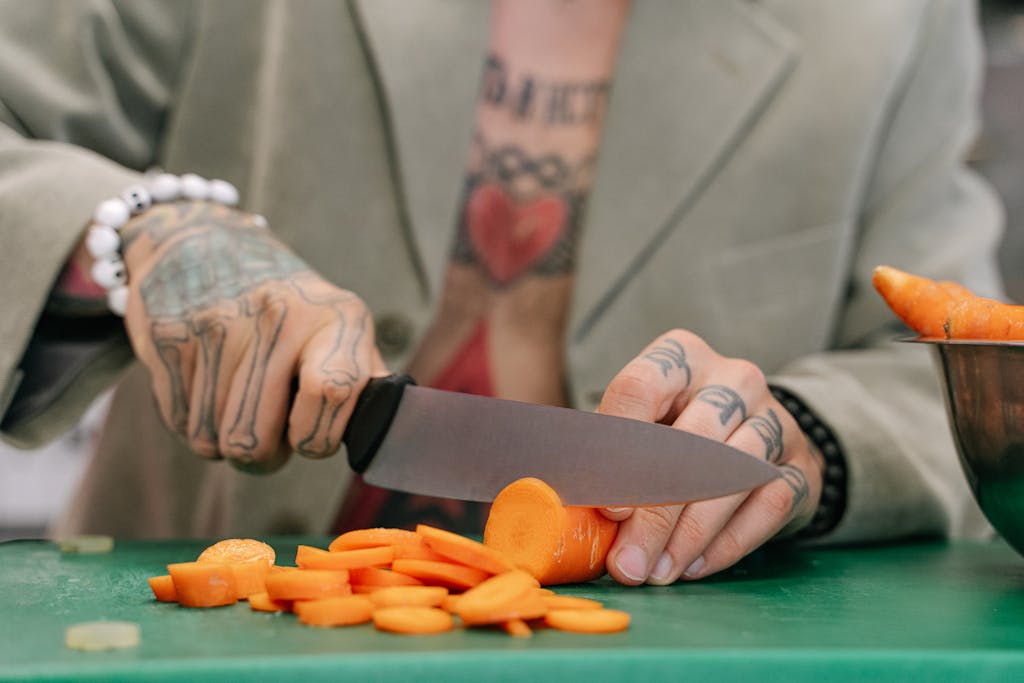
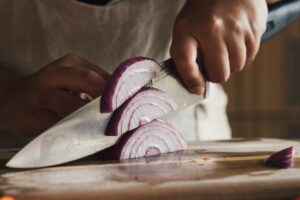
One sharp, high-quality 8-inch chef’s knife handles the majority of prep work: chopping vegetables, slicing proteins, mincing herbs, breaking down poultry, and almost everything else involving a blade. The 8-inch length is the sweet spot for most home cooks. It’s large enough for most tasks and short enough to be maneuverable.
Full-tang construction (where the metal runs the full length of the handle) provides better balance and durability than partial-tang designs. Look for a knife that feels balanced at the bolster, not handle-heavy. High-carbon stainless steel takes a better edge than standard stainless steel and is more resistant to rust than high-carbon alone.
You don’t need to spend $200 to get excellent performance. Several brands in the $60–$100 range produce knives that outperform poorly made expensive alternatives. What matters more than price is sharpness! A new knife should slice cleanly through a sheet of printer paper with minimal pressure.
Recommended Chef’s Knives
Budget Pick
Victorinox Fibrox Pro 8-Inch Chef’s Knife
Excellent edge retention, lightweight feel, and one of the best performance-per-dollar knives available.
Shop this knife >>
Best Overall
Wüsthof Classic 8-Inch Chef’s Knife
Full-tang German steel with exceptional balance and durability for long-term everyday use.
Shop this knife >>
Japanese Option
Shun Classic 8-Inch Chef’s Knife
Harder steel and thinner blade geometry for razor-sharp slicing performance.
Shop this knife >>
Paring Knife (3.5-Inch)
For precision work done in-hand — peeling fruit, coring tomatoes, trimming herbs, deveining shrimp — a small paring knife is essential. The short blade gives you control that a chef’s knife can’t provide when you’re not cutting on a board. You don’t need a fancy one. A solid paring knife costs $15–$25 and lasts years with proper care.
Honing Rod and Sharpening
A honing rod realigns the microscopic edge of a knife blade that folds over with use. It doesn’t remove metal — it straightens the existing edge. Running the knife down a honing rod before each session keeps blades sharp between professional sharpenings. A smooth ceramic or fine steel rod works better than coarse ridged steel for most kitchen knives.
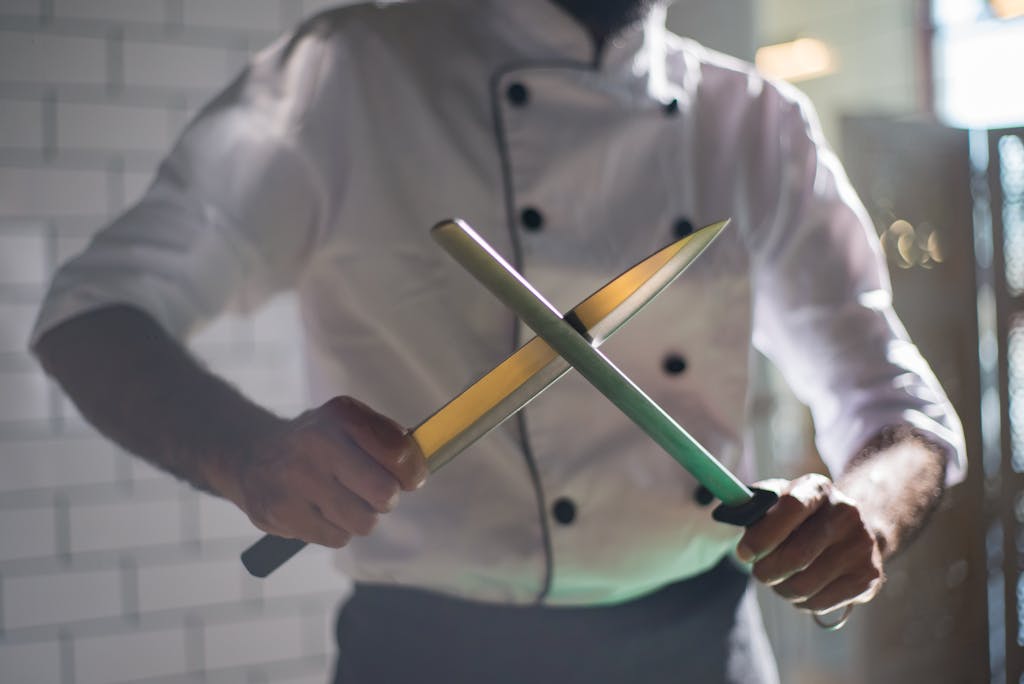
Have your knives professionally sharpened once or twice a year depending on frequency of use. The home alternative is a whetstone, which produces better results than pull-through sharpeners but requires practice to use correctly.
Knife Sharpening Tools
Honing Rod
Messermeister Fine Ceramic Honing Rod
Gentler on knife edges than aggressive steel rods while maintaining sharpness effectively.
Beginner Whetstone
Roya Craft Wood 1000/6000 Whetstone Kit
Affordable entry point for learning proper knife sharpening.
Pull-Through Option
Chef’sChoice Manual Knife Sharpener
Simple maintenance option for cooks unwilling to learn whetstone sharpening.
Pans and Cookware
You only need a small number of high-quality pieces to cover all cooking methods. More pans than you need means less practice with each, which means less confidence in the specific techniques each pan demands. Start with these.
10-Inch Stainless Steel Skillet
Fully clad stainless steel (where an aluminum or copper core runs through the entire pan, not just the base disc) is the most versatile everyday cooking pan. It sears easily, builds fond for pan sauces, handles acidic ingredients without reactivity, goes from stovetop to a 500°F oven, and is nearly indestructible with basic care.
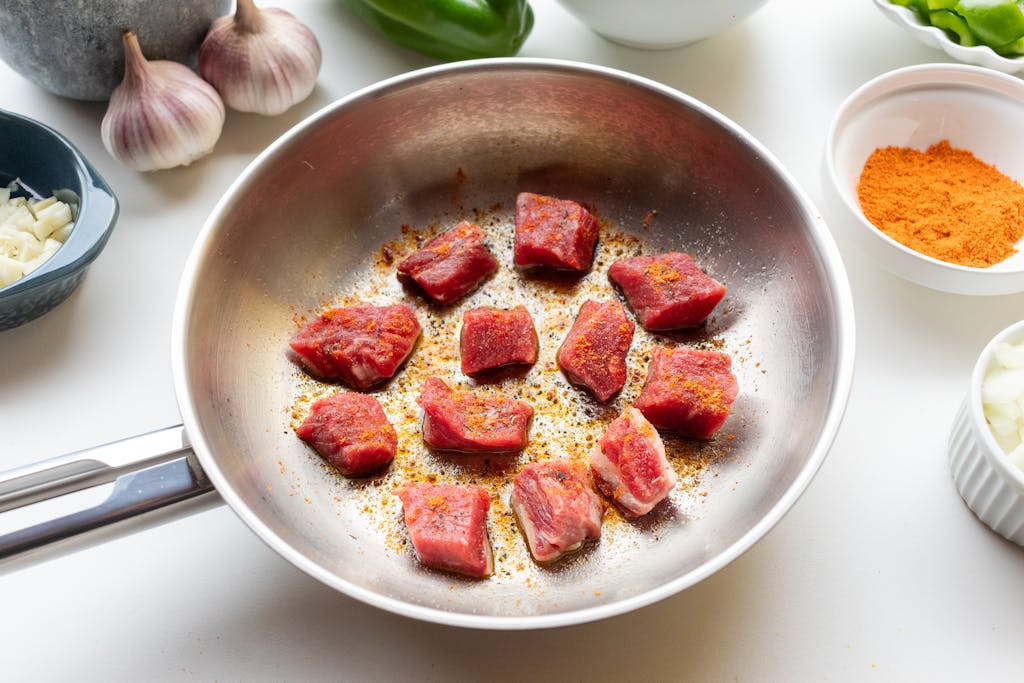
The reputation stainless has for sticking is largely a technique problem, not a material problem. Preheat the empty pan over medium-high until the water droplet test passes (drops bead and skitter rather than evaporate), add oil, heat briefly, then add protein. It releases when the sear is ready.
Recommended Stainless Steel Skillets
Budget Pick
Tramontina Tri-Ply Clad 10-Inch Skillet
Excellent heat distribution and fully clad construction at a lower price point.
Shop this stainless skillet >>
Best Overall
All-Clad D3 Stainless 10-Inch Fry Pan
Industry benchmark for home cookware durability and cooking performance.
Shop this stainless skillet >>
Premium Pick
Made In Stainless Clad Frying Pan
Professional-style skillet with excellent responsiveness and build quality. unwilling to learn whetstone sharpening.
12-Inch Cast Iron Skillet
Cast iron’s defining characteristic is thermal mass. It takes longer to reach temperature than stainless, but once it’s hot, it holds that heat for a long time and distributes it evenly across a wide surface.
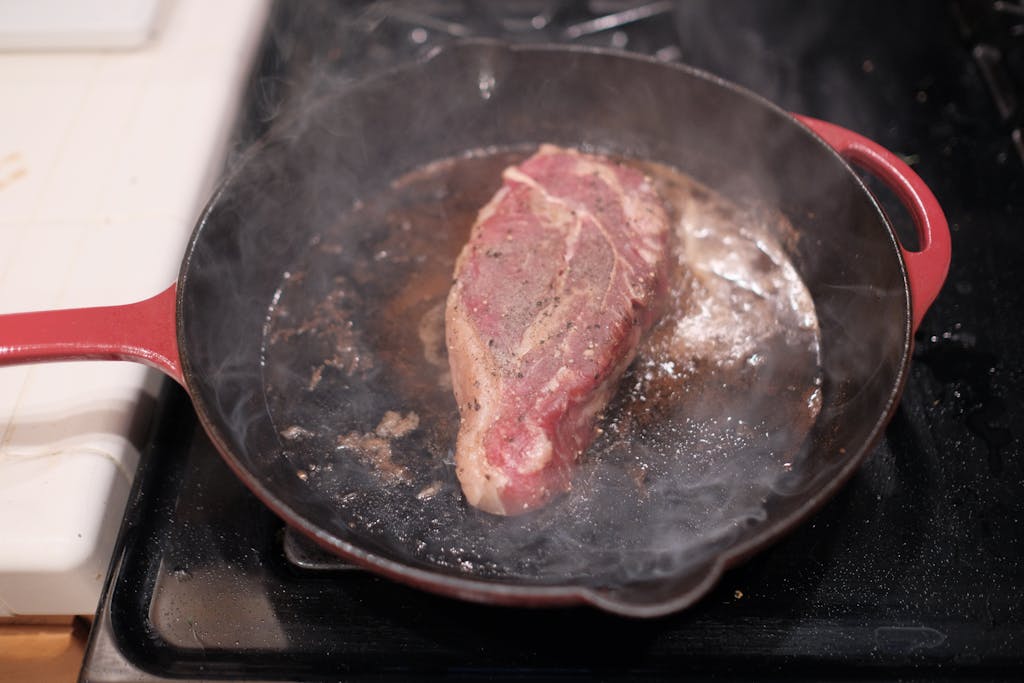
This makes it ideal for searing steaks (the pan doesn’t drop temperature when cold protein hits the surface), stovetop-to-oven applications, baking cornbread, and any high-heat work where consistent, sustained heat is the priority.
A well-maintained cast iron skillet develops a natural nonstick surface over time and improves with age and use. Dry it completely after washing (a few seconds on a low burner works well) and apply a thin coat of neutral oil periodically.
Nonstick Skillet (10-Inch)
Reserve nonstick for eggs, crepes, and delicate fish fillets. Don’t overheat it (most coatings degrade above 450–500°F), don’t use metal utensils, and replace it every few years when the coating shows wear. This is not the category to invest heavily in.
Just buy a solid mid-range nonstick and replace it on schedule rather than spending $150 on a premium version that likely won’t last much longer.
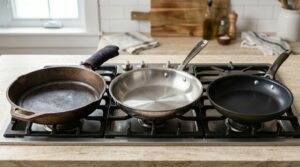
Cast Iron vs. Stainless Steel vs. Nonstick: Which One Should You Use? >>
Dutch Oven (5–6 Quart)
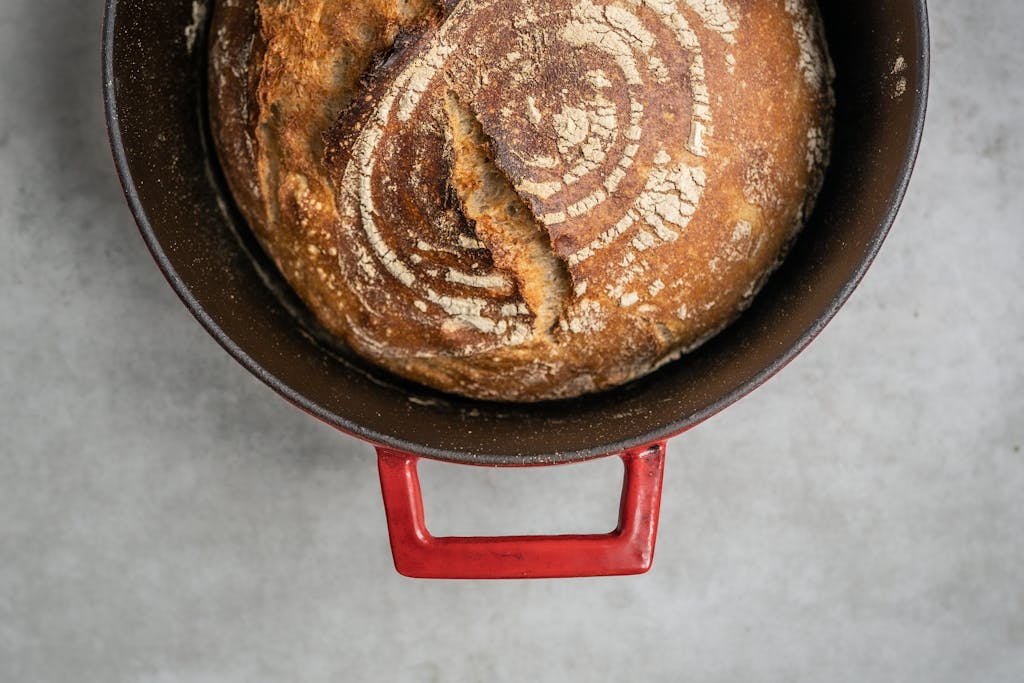
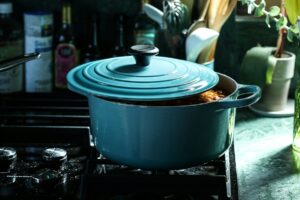
A Dutch oven is one of the most useful single pieces of cookware in a home kitchen. It braises, stews, simmers soups, deep fries, and bakes crusty bread, often even better than cookware designed specifically for that task.
The thick walls and tight lid trap steam, which self-bastes braised dishes throughout the cook. A 5 to 6-quart enameled model handles virtually everything a home cook needs.
Recommended Dutch Ovens
Budget Pick
Lodge 6QT Enameled Dutch Oven
Excellent value and perfect for bread baking, soups, and braises.
Best Overall
Staub 5.5QT Round Cocotte
Exceptional heat retention and self-basting lid design.
Premium Pick
Le Creuset Signature Dutch Oven
Legendary durability with industry-leading enamel quality.
Saucepan (2-Quart) and Stockpot (8-Quart)
A 2-quart saucepan handles sauces, grains, blanching small quantities, and warming liquids. An 8-quart stockpot handles pasta, large stocks, and anything that needs significant volume. Both should be stainless with a thick enough base to prevent hot spots.
Thermometers: Non-Negotiable
Cooking by sight and feel alone is a skill that takes years to develop. A thermometer provides accurate information instantly. It’s also your primary defense against undercooked poultry and overcooked expensive proteins.
Instant-Read Thermometer
An instant-read thermometer is the single most underowned useful kitchen tool. It tells you when chicken has reached 165°F, when a steak is at your target doneness, when bread has set internally, and when oil is at the right temperature for frying.
Models in the $30–$50 range (Thermapen One being the benchmark) are accurate to within 1°F and read in under two seconds. A $15 model from a grocery store is better than nothing.
Leave-In Probe Thermometer
For longer cooks like roasts, whole poultry, and braises, a probe thermometer with a heat-resistant cable lets you monitor internal temperature in real time without opening the oven or grill.
Some models include smartphone alerts when target temperature is reached. A significant upgrade for any cook who does weekend roasts or smoked meats.
Recommended Thermometers
Best Budget Instant-Read
TempPro TP19
Fast, accurate for everyday cooking, and a strong entry-level option for checking meats, frying temps, and baking. A solid no-frills tool that gets the job done.
Best Overall Instant-Read
Thermapen ONE
Industry benchmark for speed and accuracy (reads in ~1 second with extreme precision). Built for serious cooks who want consistent results every time.
Best Wireless / Long Cook Monitoring
ThermoWorks RFX Wireless Probe
Designed for roasts, BBQ, smoking, and oven cooks where you want continuous temperature tracking without opening the oven or grill. Extremely accurate and built for professional-level reliability.
Baking Essentials
If you bake at all, these tools produce immediate and measurable improvements in results.
Kitchen Scale
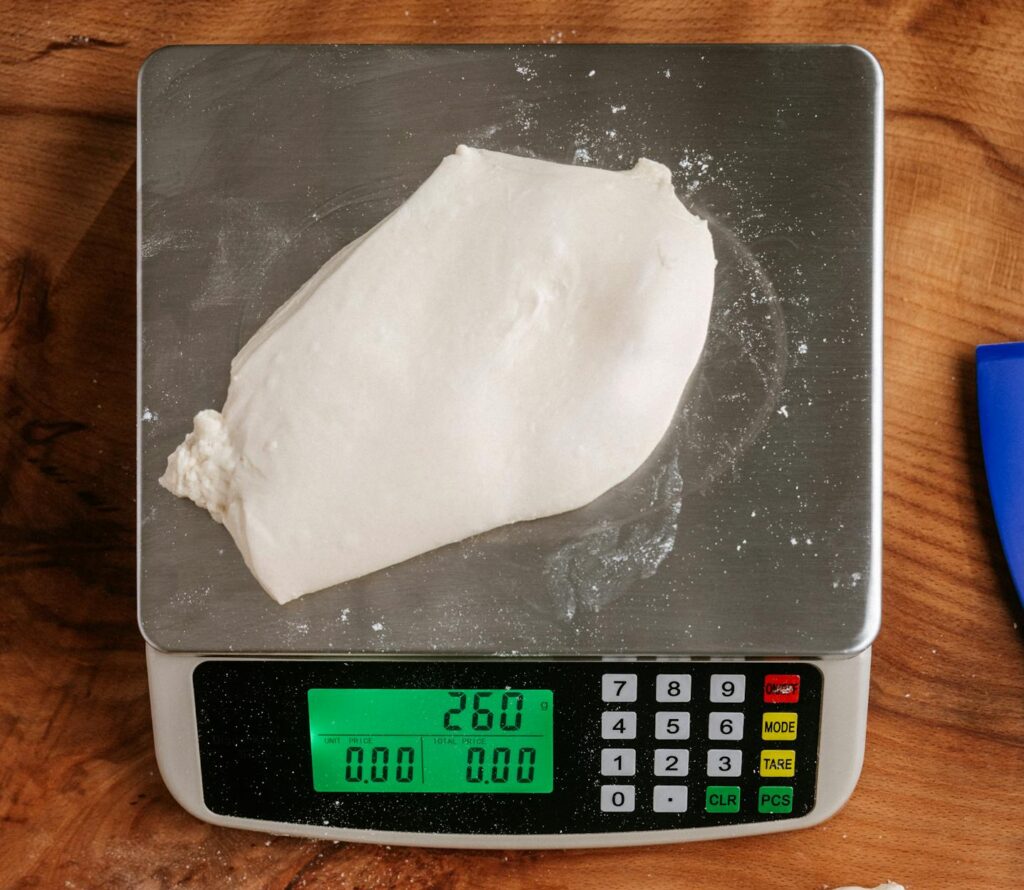
Baking by weight is dramatically more accurate than measuring by volume. A cup of flour can vary by 20–30% depending on how it was scooped and settled.
That variation directly affects texture in ways that are difficult to correct mid-recipe. A basic digital scale with a tare function (which zeros the weight of the bowl so you measure directly into it) costs under $20.
It is the highest-value baking tool per dollar spent.
Recommended Kitchen Scales
Best Budget
Ultrean Digital Kitchen Scale
Affordable and accurate with a simple tare function, stainless platform, and easy everyday usability for baking and meal prep.
Best Overall
Escali Primo Digital Kitchen Scale
Highly reliable and consistent with fast readings, simple controls, and excellent long-term durability for everyday kitchen use.
Premium Pick
OXO Good Grips Stainless Steel Food Scale
Premium design with a pull-out display, precise measurements, and a user-friendly interface ideal for frequent bakers and serious home cooks.
Heavy-Gauge Half Sheet Pan
A commercial-grade aluminum half sheet pan (18 x 13 inches) is one of the most used items in any kitchen, baking or otherwise: cookies, roasted vegetables, sheet-pan dinners, toasting nuts, and drying herbs all use it. The difference between cheap thin pans and heavy-gauge commercial versions is significant. Thin pans warp in a hot oven, which causes uneven baking and pooling of fats. Spend a few extra dollars here.
Recommended Sheet Pans
Best Budget
Nordic Ware Naturals Half Sheet Pan
Lightweight commercial-grade aluminum that heats evenly and resists warping better than most budget options.
Best Overall
USA Pan Half Sheet Baking Pan
Heavy-duty construction with reinforced steel rim for added rigidity, designed to prevent warping even at high oven temperatures.
Premium Pick
Hestan OvenBond Half Sheet Pan
Ultra-durable tri-ply stainless-aluminum construction with exceptional heat control, stability, and long-term durability for serious home cooks.
Stand Mixer
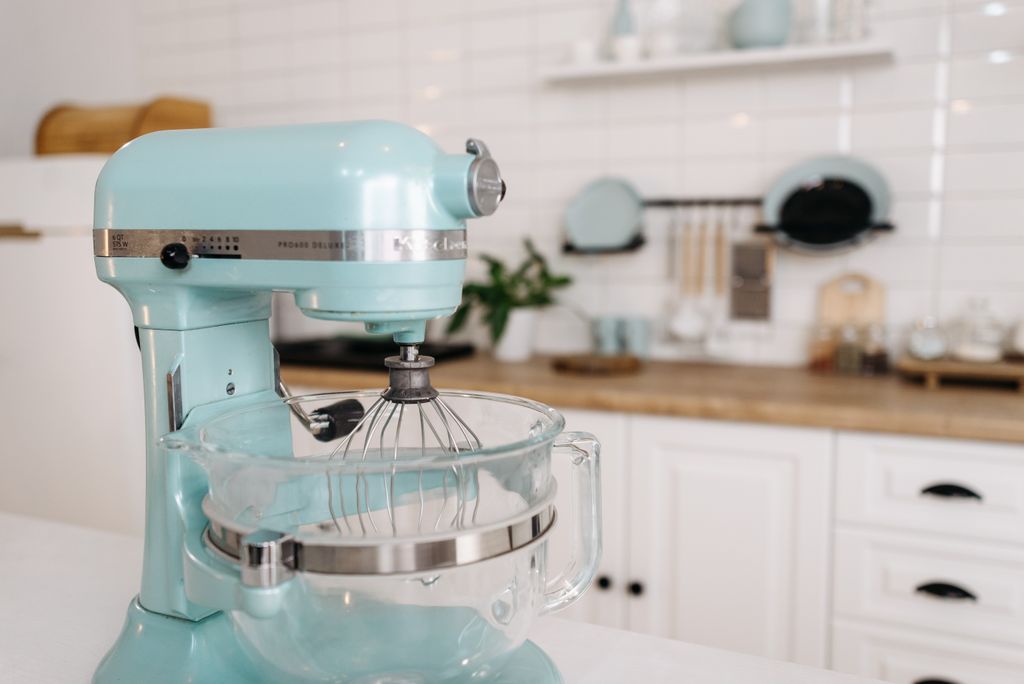
A stand mixer is not required to start baking, but it becomes genuinely useful for regular bread bakers and anyone making cookies, cakes, or multi-component desserts frequently. It mixes dough more thoroughly than hand mixing, handles heavy batters without fatigue, and frees both hands for other tasks. The KitchenAid 5-quart tilt-head is the household standard for good reason — they last for decades. A hand mixer will also handle most of the same tasks for a fraction of the price and counter space.
Recommended Mixers
Best Overall
KitchenAid Artisan 5-Quart Tilt-Head Stand Mixer
The industry standard for home bakers with excellent durability, strong all-metal construction, and a huge ecosystem of attachments for everything from pasta to ice cream.
Heavy-Duty Upgrade
KitchenAid Bowl-Lift 7-Quart Stand Mixer
A more powerful, commercial-style option designed for dense doughs, large batches, and frequent baking. The bowl-lift design provides added stability when mixing heavier mixtures.
Budget Alternative
Hamilton Beach Electric Hand Mixer
A compact and affordable alternative that handles cake batters, cookie dough, whipped cream, and basic baking tasks without taking up counter space. Not as powerful as a stand mixer, but ideal for casual or occasional baking.
Small Tools That Earn Their Place
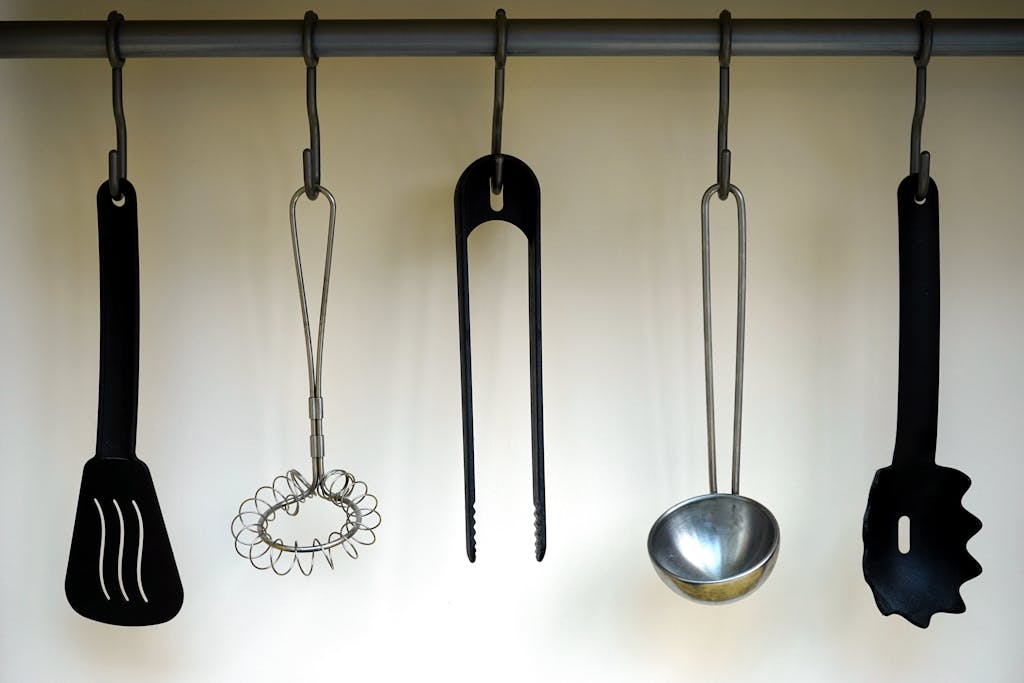
These items are inexpensive, take up minimal space, and produce immediate practical value.
- Bench scraper: the most underrated kitchen tool. Transfers chopped ingredients to the pan, portions dough, and scrapes the board clean between tasks. Buy one with a straight edge and a handle.
- Microplane grater: for citrus zest, hard cheese, ginger, and chocolate. Produces a finer, more even result than a box grater for all these applications.
- Spider/skimmer: for lifting pasta, blanched vegetables, fried foods, and poached eggs from hot liquid cleanly and quickly.
- Tongs (12-inch, spring-loaded): the extension of your hand for the grill, the stovetop, and the oven. Get two.
- Wooden spoon and silicone spatula: both essential, both inexpensive. The spatula should be heat-resistant to at least 450°F.
- Y-peeler or swivel peeler: inexpensive but worth getting a quality version. Cheap peelers bind and require force; a good peeler glides.
- Colander: for draining pasta, washing produce, and straining liquids. Stainless steel over plastic.
- Cutting board: 18 x 12 inches minimum. Hardwood or thick plastic. The board should not slide. A damp towel underneath solves this if it is sliding.
Recommended Small Kitchen Tools
Bench Scraper
OXO Stainless Steel Bench Scraper
Microplane
Microplane Premium Classic Zester Grater
Spider Strainer
Hiware Stainless Steel Spider Strainer
Tongs
OXO 12-Inch Stainless Steel Tongs
Silicone Spatula
Vegetable Peeler
Kuhn Rikon Original Swiss Peeler
Colander
Cutting Board
What You Don’t Need
Kitchen gadget marketing is sophisticated and targets home cooks specifically. Most single-purpose tools like avocado slicers, strawberry hullers, egg separators, electric can openers, garlic presses, and mechanical herb strippers are rarely used after the first week and take up drawer space forever. Before buying any single-purpose tool, ask whether a knife, a spoon, or a pan you already own can do the same job. Usually it can.
The exception is any tool you use several times a week. A salad spinner, a mandoline slicer, and a dedicated pasta pot are all technically single-purpose, but for households that use them constantly it makes them worth the purchase.
Frequently Asked Questions (FAQs)
What kitchen tools does every home cook need?
The non-negotiables are a sharp 8-inch chef’s knife, a large cutting board, a 10-inch stainless skillet, a 12-inch cast iron skillet, a Dutch oven, an instant-read thermometer, a kitchen scale, and a heavy half sheet pan. These eight items cover most of everyday home cooking.
What is the most important kitchen tool?
A sharp chef’s knife is the single most important kitchen tool. It’s used in virtually every cooking session and handles the majority of prep work. A dull knife is also the most dangerous tool in the kitchen because it requires force to cut, which reduces control significantly.
Do I need a stand mixer for baking?
Not to start. A hand mixer handles most basic baking tasks — cake batters, cookie doughs, whipped cream, meringue. A stand mixer becomes worth the investment once you bake bread regularly or find yourself making large batches frequently. A hand mixer is the more practical first purchase.
What pans should every home cook own?
The core pan set for a home kitchen is a 10-inch stainless skillet, a 12-inch cast iron skillet, a nonstick skillet, and a Dutch oven. These four pieces cover searing, stovetop-to-oven cooking, nonstick applications, and braising or slow cooking. A 2-quart saucepan and a large stockpot round out the set.
How important is a kitchen scale for cooking?
For baking, a kitchen scale is essential. Measuring flour and other dry ingredients by weight is dramatically more accurate than measuring by volume, which can vary by 20–30%. For savory cooking, a scale is useful for portioning proteins accurately and for any recipe that lists ingredients by weight. They cost under $20 and are one of the highest-value tools in the kitchen.