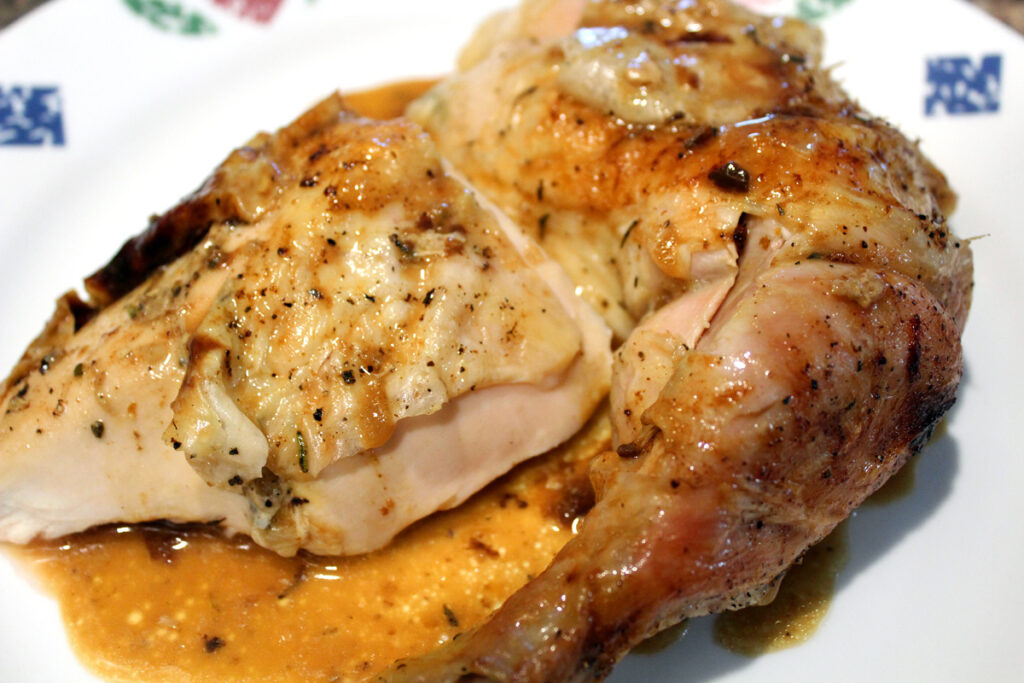
There is something timeless about a whole roast chicken coming out of the oven. The crackling golden skin, the aroma of garlic and herbs filling the kitchen, and the rich pan juices bubbling underneath make it one of the most satisfying homemade dinners you can cook.
This Golden Herb Butter Roast Chicken recipe keeps the process simple while adding a few small techniques that make a huge difference in flavor and texture. Butter is tucked underneath the skin to keep the meat juicy, fresh herbs build deep savory flavor, and a touch of honey helps create beautifully caramelized skin without making the chicken sweet.
Why This Roast Chicken Recipe Works
Many roast chicken recipes either focus only on crispy skin or only on juicy meat. This method is designed to achieve both.
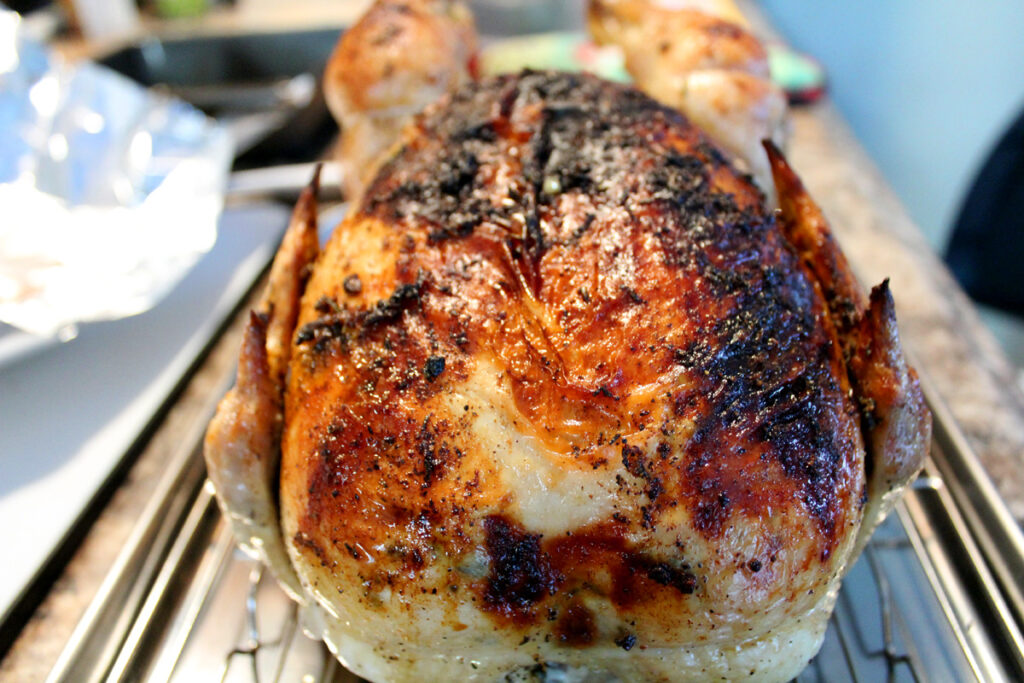
A high starting temperature helps render the skin quickly while creating deep golden color. After that, lowering the heat allows the chicken to finish cooking evenly without drying out the breast meat.
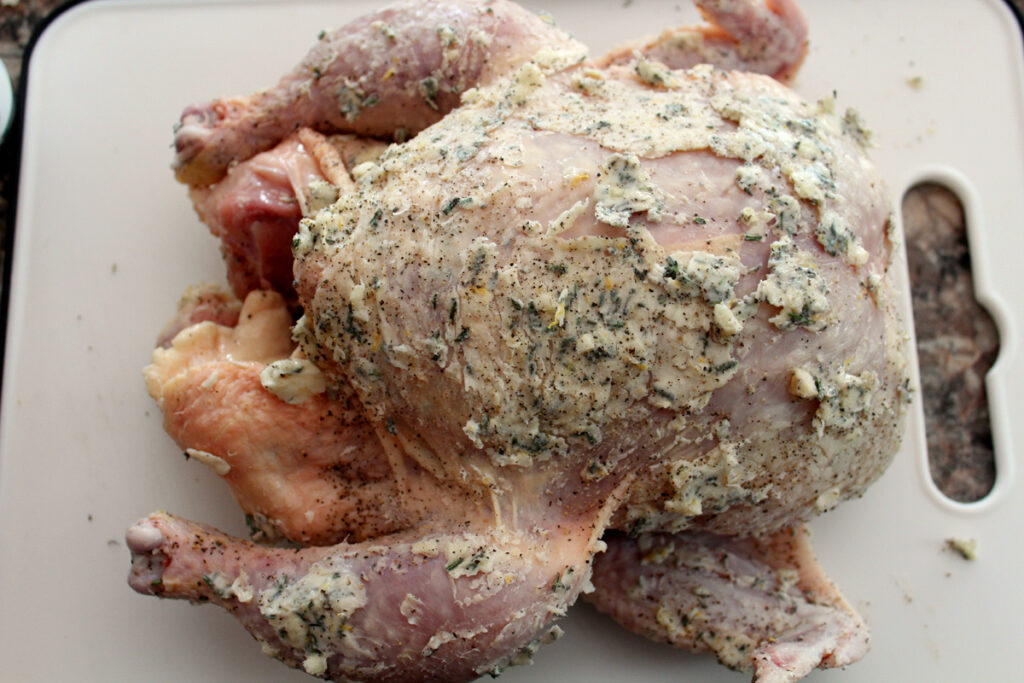
The garlic herb compound butter underneath the skin slowly melts into the chicken as it roasts, adding flavor directly into the meat instead of only seasoning the surface.
Another key detail is drying the chicken thoroughly before cooking. Moisture is the enemy of crispy skin, so taking a few extra minutes to pat the chicken dry makes a noticeable difference.
What Makes This Recipe Unique
This isn’t just another basic roast chicken recipe.
A few subtle additions help separate it from standard versions:
Herb Butter Under the Skin
Instead of simply rubbing seasoning only on top, the butter is also spread directly beneath the skin where it can flavor the meat as it cooks.
Honey for Better Browning
A small amount of honey mixed into the butter helps the skin caramelize beautifully while balancing the savory herbs and garlic.
Built-In Pan Jus
Rather than making a separate gravy, the roasting pan itself becomes the base for a rich homemade jus using the chicken drippings and browned bits from the pan.
Aromatics Inside the Cavity
Lemon, onion, garlic, and thyme gently steam from inside the chicken while roasting, adding subtle flavor and moisture throughout the bird.
Tips for the Best Roast Chicken
Dry the Chicken Well
The drier the skin is before roasting, the crispier it becomes in the oven.
For even better results, leave the chicken uncovered in the refrigerator for several hours or overnight before cooking.
Do Not Constantly Baste
Basting too frequently can soften the skin. Once or twice during roasting is enough.
Let the Chicken Rest
Resting the chicken for 15–20 minutes after roasting allows the juices to redistribute through the meat instead of running out onto the cutting board.
Lightly tenting with foil is fine, but avoid wrapping it tightly or the steam can soften the skin.
Use a Meat Thermometer
The safest and easiest way to know when roast chicken is done is with a thermometer.
Breast meat: 165°F
Thigh meat: 175°F
What to Serve with Roast Chicken
This roast chicken pairs perfectly with classic comfort food sides.
Popular options include:
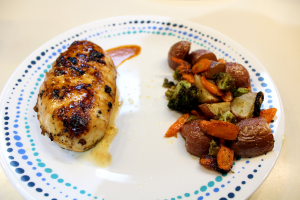
Crispy smashed potatoes
Roasted asparagus
Garlic green beans
Buttered carrots
Homemade stuffing
Fresh salad
Crusty bread
The homemade pan jus also tastes incredible spooned over potatoes or vegetables.
How to Store Leftovers
Store leftover chicken in an airtight container in the refrigerator for up to 4 days.
The leftover meat is excellent for:
Chicken sandwiches
Soups
Salads
Pasta
Chicken pot pie
Fried rice
Do not throw away the carcass. The bones make an excellent homemade chicken stock with deep flavor.
Golden Herb Butter Roast Chicken
A classic whole roast chicken with crisp golden skin, juicy meat, and rich herb butter tucked beneath the skin for maximum flavor. Roasted over aromatic vegetables and finished with a simple homemade pan jus, this comforting dinner feels elevated while still being approachable for a weeknight or weekend meal.
Pat the chicken completely dry with paper towels, including inside the cavity. Remove any giblets or neck from inside the chicken if included.Let the chicken sit uncovered for 30 minutes at room temperature while preparing the remaining ingredients.
Make the Herb Butter
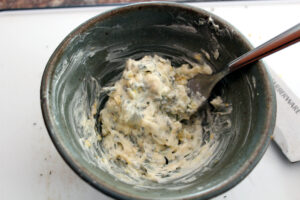
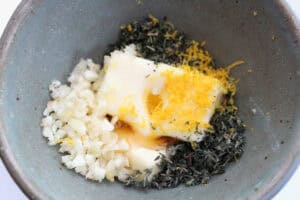
In a small bowl, combine softened butter, minced garlic, thyme, rosemary, lemon zest, honey, and a pinch of salt. Mix until smooth and evenly combined.
Season the Chicken
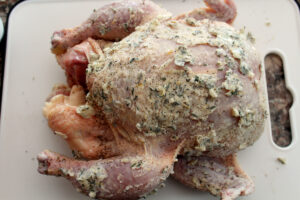
Carefully loosen the skin over the breasts and thighs using your fingers.Spread most of the herb butter underneath the skin. Rub the remaining butter all over the outside of the chicken.Season the exterior generously with kosher salt and black pepper.
Stuff the Cavity
Fill the cavity with quartered onion, lemon halves, smashed garlic cloves, and thyme sprigs.Tie the legs together with kitchen twine and tuck the wing tips underneath the bird.
Prepare the Pan
Scatter the chopped carrot and celery in the bottom of a roasting pan or oven-safe skillet.Place the chicken on top of the vegetables. Add 2–3 tablespoons of water to the pan to prevent early burning.
Roast the Chicken
Preheat oven to 425°F.
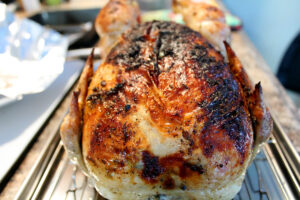
Roast the chicken for 20 minutes at 425°F to develop color and crisp skin.Reduce the oven temperature to 375°F and continue roasting for 45–60 minutes, or until the thickest part of the breast reaches 165°F and the thighs reach 175°F.
Baste once or twice during cooking using the pan drippings.
Rest the Chicken
Transfer the chicken to a cutting board or wire rack and let rest for 15–20 minutes before carving.Discard the aromatics from inside the cavity.
Make the Pan Jus
Place the roasting pan on the stovetop over medium heat if stovetop-safe.
Add chicken stock and white wine. Scrape up the browned bits from the bottom using a wooden spoon.Simmer for 3–5 minutes until slightly reduced.
Whisk in Dijon mustard and butter until smooth.
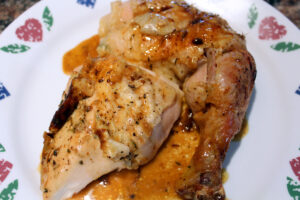
Serve warm alongside carved chicken or pour over the top.
Notes
Drying the chicken thoroughly before roasting is key for crispy skin.
For even better results, leave the chicken uncovered in the refrigerator overnight before cooking.
Avoid covering the chicken tightly while resting or the skin may soften from steam.
Save the leftover carcass and bones for homemade chicken stock.
If the vegetables in the pan begin to darken too much during roasting, add a splash of water or stock.
White wine adds depth to the jus, but water or extra stock also works well.
Frequently Asked Questions (FAQs)
Do I need to wash the chicken before roasting?
No. Washing raw chicken is generally not recommended because it can spread bacteria around the sink and kitchen through water splatter. Simply pat the chicken dry with paper towels before seasoning.
Should I remove the giblets from inside the chicken?
Yes. Most whole chickens include a packet containing the neck and giblets inside the cavity. Remove them before cooking.
You can save them for stock or gravy if desired.
Can I make roast chicken without a roasting rack?
Absolutely. The chicken can roast directly on top of vegetables like carrots and celery, which also adds flavor to the pan drippings.
Why is my roast chicken skin not crispy?
Usually this happens because:
– The chicken was not dried thoroughly – The oven temperature was too low – The chicken was covered too tightly while resting – It was basted too often
How do I know when the chicken is done?
The juices should also run mostly clear when pierced near the thigh.
The thickest part of the breast should reach 165°F and the thighs should reach around 175°F.
Can I use dried herbs instead of fresh?
Yes. Use about one-third the amount of dried herbs compared to fresh herbs since dried herbs are more concentrated.
What is pan jus?
Pan jus is a light sauce made from the natural drippings and browned bits left in the roasting pan after cooking. It is thinner than gravy but packed with flavor.
The Ultimate Crispy Herb Butter Roast Chicken for Any Occasion
A well-made roast chicken is one of the most rewarding meals you can cook at home. It feels impressive enough for guests while still being simple and comforting enough for a regular family dinner.
This Golden Herb Butter Roast Chicken combines crispy skin, juicy meat, rich herb flavor, and a simple homemade pan jus into one classic recipe that is both approachable and deeply satisfying.
Once you make a whole chicken this way, it becomes the kind of dinner you come back to again and again.
Hi, I’m Dylan, the recipe developer, cook, and photographer behind Cooked & Baked, which I run alongside my girlfriend, Jill. Together, we share homemade recipes focused on real ingredients, approachable cooking, and bold flavors.
Most of my time in the kitchen is spent cooking, grilling, and smoking everything from simple comfort foods to slow-cooked barbecue favorites. Outside the kitchen, I also enjoy gardening and using fresh homegrown ingredients in our recipes whenever possible, especially fresh herbs and seasonal vegetables.
Manage Consent
To provide the best experiences, we use technologies like cookies to store and/or access device information. Consenting to these technologies will allow us to process data such as browsing behavior or unique IDs on this site. Not consenting or withdrawing consent, may adversely affect certain features and functions.
Functional
Always active
The technical storage or access is strictly necessary for the legitimate purpose of enabling the use of a specific service explicitly requested by the subscriber or user, or for the sole purpose of carrying out the transmission of a communication over an electronic communications network.
Preferences
The technical storage or access is necessary for the legitimate purpose of storing preferences that are not requested by the subscriber or user.
Statistics
The technical storage or access that is used exclusively for statistical purposes.The technical storage or access that is used exclusively for anonymous statistical purposes. Without a subpoena, voluntary compliance on the part of your Internet Service Provider, or additional records from a third party, information stored or retrieved for this purpose alone cannot usually be used to identify you.
Marketing
The technical storage or access is required to create user profiles to send advertising, or to track the user on a website or across several websites for similar marketing purposes.