A Dutch oven is one of the few pieces of cookware that every home cook should have. It braises, stews, deep fries, makes soups, and bakes artisan bread, often even better than cookware designed specifically for each of those tasks. It functions equally well on the stovetop, in the oven, and outdoors over an open fire. Buy one quality Dutch oven and you’ve covered a substantial portion of what any home kitchen needs.
This guide covers what a Dutch oven actually does and why it does it so well, the best specific applications for it, how to choose between enameled and bare cast iron, what size to buy, and an honest take on the price spectrum from Lodge to Le Creuset.
What Is a Dutch Oven Good For?
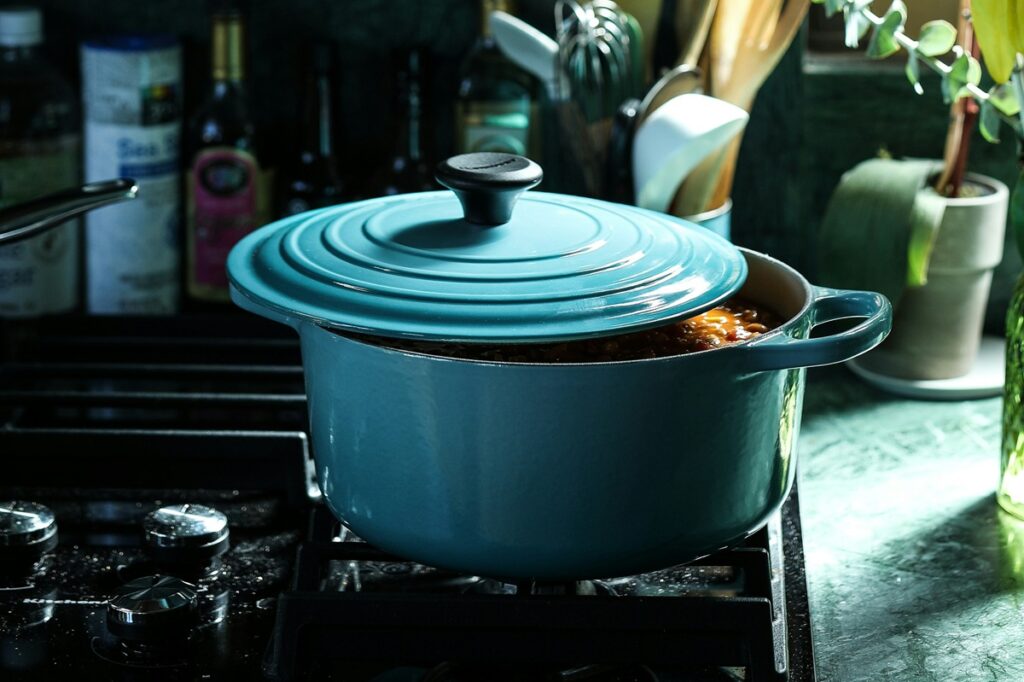
A Dutch oven is a heavy, lidded pot (typically cast iron, enameled or bare) that excels at braising, slow-cooking soups and stews, baking crusty bread, and frying. Its thick cast iron walls retain and distribute heat evenly, and its tight-fitting lid traps steam that bastes food throughout long cooks. No other common piece of cookware covers this range of applications as effectively.
What Makes a Dutch Oven Different from a Regular Pot
The Dutch oven’s performance advantages come from its construction. Cast iron walls that are typically 3–4mm thick have significant thermal mass. They heat slowly, but once hot, they hold temperature with remarkable stability. When you open the lid to check a braise, the oven temperature drops momentarily, but the pot walls barely budge. The thermal stability gives you consistent, even cooking.
The lid design is equally important. A heavy, well-fitted cast iron lid creates a near-seal when in place. Steam produced during cooking circulates inside the pot, condenses on the underside of the lid, and drips back down onto the food in a continuous cycle. This self-basting effect keeps braised meats moist and produces the concentrated, rich sauces that long braises are known for without requiring manual basting or liquid additions.
Finally, Dutch ovens transition seamlessly from stovetop to oven and back. You can brown aromatics and sear protein on the stovetop, add liquid, put on the lid, and transfer the entire pot to a 325°F oven for three hours all in the same vessel. Fewer pieces of equipment, less cleanup, and better flavor from the continuous fond development.
The Best Uses for a Dutch Oven
Braising
Braising is the application where nothing else comes close. A braise means cooking a tough, collagen-rich cut (short ribs, pork shoulder, lamb shanks, beef chuck) in a small amount of liquid at low heat over several hours. The collagen breaks down into gelatin, the connective tissue dissolves, and the meat becomes tender to the point of falling apart. The braising liquid reduces into a rich, concentrated sauce.
Start by browning the protein on the stovetop in the Dutch oven with fat. Remove and set aside once done. Cook aromatics in the same pot. Deglaze with wine or stock, scraping up the fond. Return the protein. Add enough liquid to come one-third to halfway up the sides of the meat. Put the lid on and put it into a 300–325°F oven for 2–4 hours depending on the cut. The result is something a stovetop pot without a proper seal or a roasting pan cannot replicate.
Soups and Stews
A Dutch oven’s thick walls prevent the bottom scorching that plagues thin-bottomed pots during long simmers. Even heat distribution means no hot spots, which means you can simmer a chicken soup, beef stew, or winter chili at a low, steady bubble for hours without watching it constantly. The heavy lid also reduces evaporation, which means your liquid levels stay more stable and you spend less time adding stock.
Baking Crusty Bread
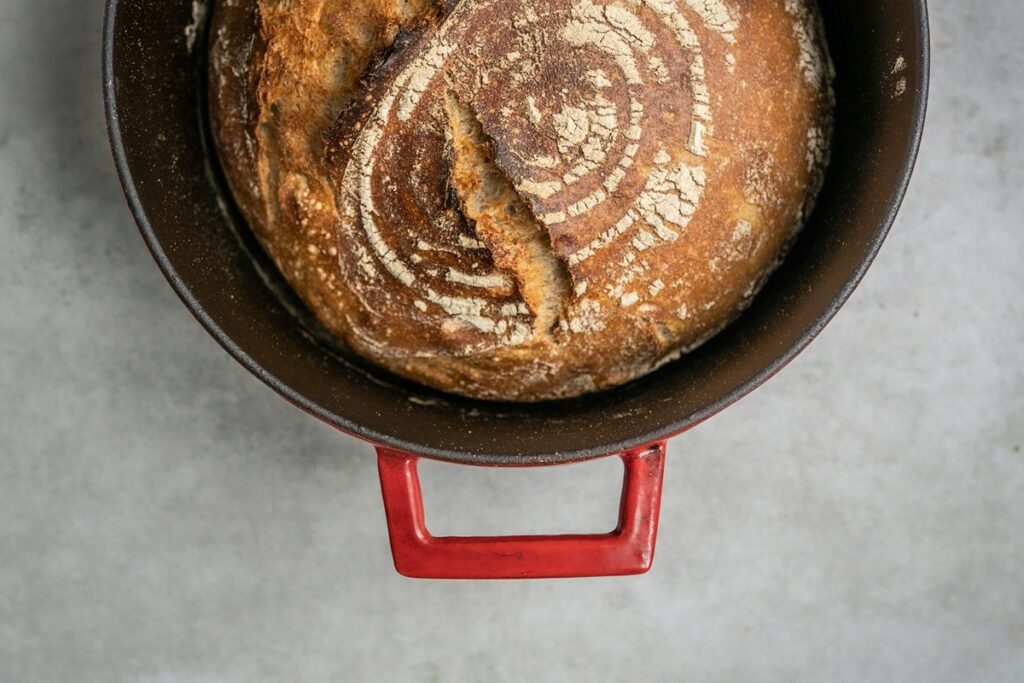
Baking bread in a preheated Dutch oven is one of the most reliable techniques in home baking for producing bakery-quality bread. The lid traps steam produced by the dough in the first 20 minutes of baking. This steam keeps the crust soft enough to expand fully before it sets, producing the oven spring that gives well-baked bread its dramatic rise. After removing the lid for the final 15–20 minutes, the crust browns and hardens into the crackling exterior that artisan loaves are known for.
Without a Dutch oven, replicating this result requires a baking stone, a steam injection setup, and a lot of timing precision. With a Dutch oven, it’s reliably simple.
Deep Frying
The thermal mass that makes a Dutch oven ideal for braising also makes it one of the best vessels for deep frying at home. In a thin-walled pot, when cold food is lowered into hot oil, the temperature drops dramatically, leading to greasy results with no crispiness. A Dutch oven’s walls hold the oil temperature far more stable through the addition of food, which means better, crispier food with less oil absorption. The high walls also contain splatter more effectively than a shallow skillet.
One-Pot Meals
The Dutch oven’s ability to sear on the stovetop, then slow-cook in the oven, makes it the original one-pot meal vessel. Rice dishes, pasta braises, and grain-based stews can all be started in a Dutch oven and finished without transferring to another container. The fond from the initial sear stays in the pot and infuses the entire dish as it cooks.
Enameled vs. Bare Cast Iron
The choice for most home cooks comes down to enameled or bare cast iron Dutch ovens, and they have meaningfully different characteristics.
Enameled cast iron (Le Creuset, Staub, Lodge Enameled) is the right choice for most home kitchens. The enamel interior is non-reactive, which means it handles acidic ingredients like tomatoes, wine, citrus, and vinegar without concern, even during long braises. It doesn’t require seasoning, cleans easily with warm soapy water, and can go right from oven to table. The enamel also makes it easier to monitor fond development, since the light interior shows color changes clearly.
Bare cast iron Dutch ovens are less expensive, require seasoning and careful maintenance, and are reactive with acidic ingredients during long cooks (just like a cast iron pan). They are excellent for bread baking where acidity isn’t a factor, and for outdoor cooking where aesthetic considerations don’t apply. For indoor home cooking involving the full range of braising and stewing applications, enameled is the more practical choice.
A 5 to 6-quart Dutch oven handles the majority of home kitchen applications. It fits a 4-pound pork shoulder with room for braising liquid. It comfortably makes soup or stew for four to six people. A standard no-knead bread loaf fits with room to expand. A 5.5-quart is the most commonly recommended size.
If you regularly cook for larger groups, a 7-quart is worth the additional cost and storage space. For smaller households cooking for two, a 3.5 to 4-quart handles most tasks without the bulk of a larger vessel.
Avoid buying a Dutch oven that’s too small on the grounds of cost. A 3-quart pot limits which cuts you can braise (larger pork shoulders and briskets won’t fit) and makes it easy to overfill.
Which Brand has the Best Dutch Oven?
Le Creuset and Staub make exceptional Dutch ovens. The enamel quality, machined lid fit, and heat distribution are all outstanding. A standard 5.5-quart Le Creuset costs approximately $300–$450. With care, it will last decades and can be passed to the next generation.
Lodge’s enameled cast iron line offers performance that is very close to the premium brands at approximately $60–$80 for the equivalent size. The enamel is slightly less durable over very long periods of high-heat use, and the interior finish is rougher, but for practical everyday home cooking the differences are small.
We recommend buying Lodge if budget is a consideration and you want excellent daily performance. Buy Le Creuset or Staub if you cook frequently, want a piece of equipment you’ll never need to replace, and appreciate the premium construction.
A 5 to 6-quart Dutch oven is the right starting point for most home kitchens. It handles a 4-pound braise, makes soup for 4–6 people, and fits a standard loaf for bread baking. Go to 7 quarts if you regularly cook for large groups.
Is Le Creuset worth the price over Lodge?
Le Creuset and Staub are genuinely excellent and built to last decades, but Lodge’s enameled cast iron performs at a very high level at roughly one-fifth the cost. For most home cooks, Lodge represents excellent value. Le Creuset is worth the investment if you cook frequently and appreciate heirloom-quality construction.
Can I use a Dutch oven on an induction cooktop?
Yes. Cast iron (both enameled and bare) is induction compatible because it contains iron that interacts with the induction element. It heats more slowly than thin induction-specific cookware but distributes and holds heat extremely well once up to temperature.
Can you bake bread in a Dutch oven?
Yes! A preheated Dutch oven is one of the most reliable ways to produce bakery-quality crust at home. The lid traps steam from the dough during the first 20 minutes of baking, allowing the loaf to fully expand before the crust sets. Removing the lid for the final 15–20 minutes produces a deeply browned, crackling crust.
Do you need to season an enameled Dutch oven?
No. The enamel coating on an enameled cast iron Dutch oven is non-reactive and doesn’t require seasoning. Simply wash with warm soapy water and dry completely. Bare cast iron Dutch ovens do require seasoning — a thin coat of neutral oil baked on periodically to maintain the protective surface.
Hi, I’m Jill! I run Cooked & Baked alongside my boyfriend, Dylan, where we share homemade recipes, cozy comfort foods, and desserts made with lots of love (and usually a little extra butter).
Baking is my favorite kind of creativity, and I especially love making homemade breads, whimsical desserts, and sweet treats that feel special without being fussy. I’m always testing new ideas in the kitchen and love finding little ways to make everyday moments feel more magical through food.
Manage Consent
To provide the best experiences, we use technologies like cookies to store and/or access device information. Consenting to these technologies will allow us to process data such as browsing behavior or unique IDs on this site. Not consenting or withdrawing consent, may adversely affect certain features and functions.
Functional
Always active
The technical storage or access is strictly necessary for the legitimate purpose of enabling the use of a specific service explicitly requested by the subscriber or user, or for the sole purpose of carrying out the transmission of a communication over an electronic communications network.
Preferences
The technical storage or access is necessary for the legitimate purpose of storing preferences that are not requested by the subscriber or user.
Statistics
The technical storage or access that is used exclusively for statistical purposes.The technical storage or access that is used exclusively for anonymous statistical purposes. Without a subpoena, voluntary compliance on the part of your Internet Service Provider, or additional records from a third party, information stored or retrieved for this purpose alone cannot usually be used to identify you.
Marketing
The technical storage or access is required to create user profiles to send advertising, or to track the user on a website or across several websites for similar marketing purposes.